Northwest Ocala — horse country
34475 · 34482
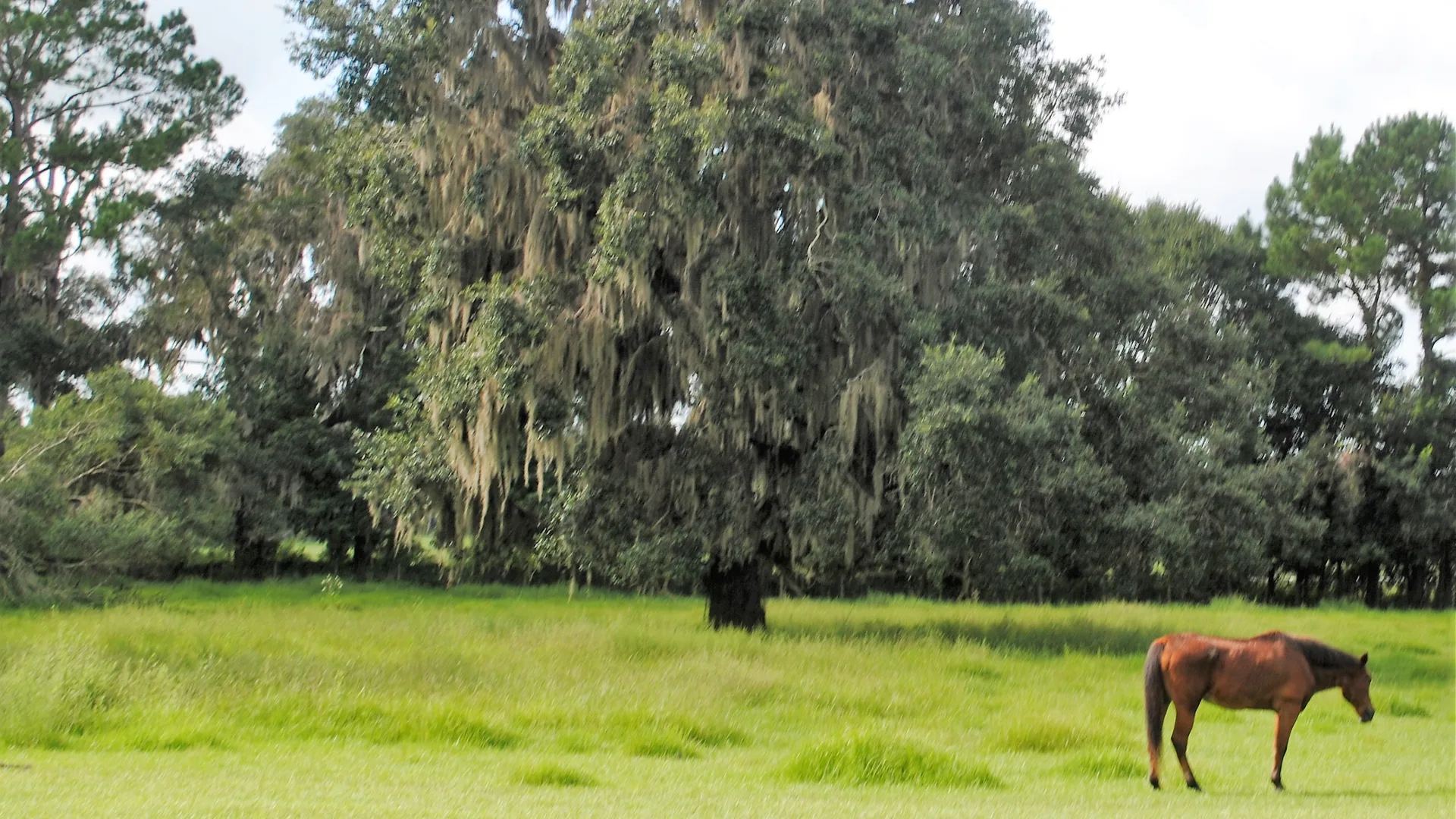
“Horse Capital of the World” is a registered trademark, and Marion County is the place that holds it. That is not marketing reaching past the product. By most counts this one county keeps more horses than any other county in America, across hundreds of farms — and the heaviest concentration of them runs through the northwest quadrant this page is about: live-oak allées, four-board fencing, and the morning fog over pasture that the homepage film banks through on its way in.
The ground did it
The reason is under the grass. North-central Florida sits on limestone, and limestone feeds calcium into everything that grows over it — the same geological accident that made Lexington, Kentucky a breeding capital. A foal raised on this pasture builds bone drinking water and eating grass that other places have to supplement. Add a winter mild enough to train through while northern tracks are frozen, and you have the two raw materials a horse industry needs before anyone builds a barn.
From one farm to the Triple Crown
Somebody had to notice. In the 1930s Carl Rose — a road builder who knew Florida’s limestone from putting highways over it — argued the soil here would grow horses as sound as Kentucky’s, and started Rosemere Farm on what was then the edge of Ocala, the county’s first commercial Thoroughbred operation. He was right in front of everyone: in 1956, Needles, foaled in Ocala, won the Kentucky Derby and the Belmont as the first Florida-bred ever to take the Derby, and came home to stand at Bonnie Heath Farm. Farms multiplied behind him.
What followed reads like a wing of racing’s hall of fame. Dr. Fager, bred and raised at Tartan Farms here, put together the 1968 season no horse has matched — four championships in a single year, including Horse of the Year, and a world-record mile run carrying 134 pounds. Affirmed, foaled at Harbor View Farm in Marion County, won the 1978 Triple Crown — the last horse to do it for thirty-seven years. Unbridled, another Tartan foal, took the 1990 Derby and Breeders’ Cup Classic. When a Derby field loads anywhere, the odds are good that part of it learned to run on Marion County grass.
The industry today
The engine room now is the Ocala Breeders’ Sales complex, whose two-year-olds-in-training auctions draw buyers from every racing jurisdiction in the world — a spring OBS sale is where a large share of each year’s stakes winners change hands. And it is not only Thoroughbreds: Marion County farms raise Quarter Horses, Arabians and Paso Finos, and the show world runs here year-round. HITS Post Time Farm has brought its winter hunter-jumper circuit to northwest Marion for decades.
The WEC changed the map
The modern anchor is the World Equestrian Center, opened in 2021 off US-27 — among the largest equestrian complexes in the country, with arenas, hotels and restaurants that run shows essentially year-round. It changed the market around it: farms that were quiet acreage a decade ago now sit minutes from an international venue, and the corridor between the WEC and I-75 has some of the strongest demand in the county.
Buying into horse country
Homes here are a different search than in town: mini-farms on five and ten acres, equestrian estates with barns and irrigated paddocks, and a small number of neighborhoods tucked between farms. The deal turns on things a city listing never mentions — agricultural zoning, well and water rights, soil, and how the land drains. If the reason you’re looking at Ocala involves a horse, this is the conversation to have with Shane first; it is also the part of the county where knowing a farm is coming to market before the sign goes up matters most.
Looking at Northwest Ocala?
Photo: Excel23, Wikimedia Commons, CC BY-SA 4.0